
Still Walking the Yard? Here’s How Modern YMS Fixes It
10 min read
Key takeaways
- Manual yard walks are a hidden operational drain that most teams underestimate. Walking the yard multiple times a day wastes labor hours, delays decisions, and creates safety risks without actually improving visibility.
- The real problem is a lack of real-time data, not the lack of effort. Teams compensate for poor visibility with manual audits, but this only introduces delays and inaccuracies into dock scheduling and trailer coordination.
- Yard management software replaces manual audits with continuous, real-time visibility. Instead of reacting to problems after they occur, teams can proactively manage trailer movements, dock assignments, and yard flow.
- Eliminating yard walks directly impacts cost and throughput. Reduced labor waste, faster trailer location, and better dock utilization translate into lower detention fees and more predictable operations.
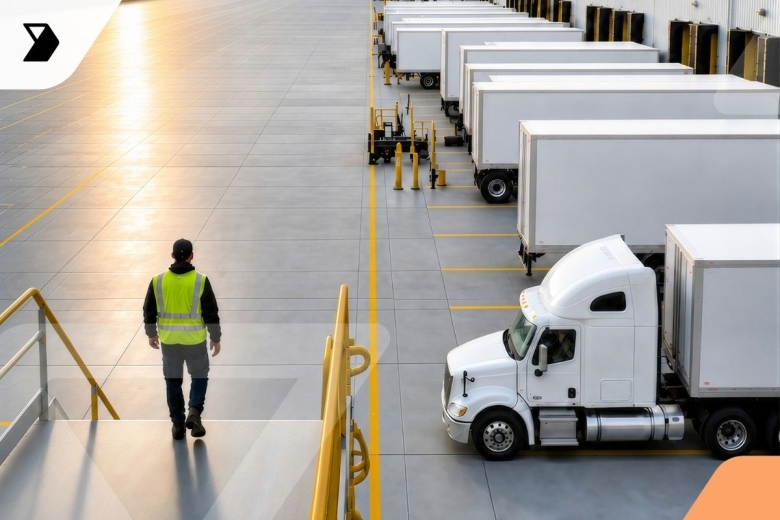
At mid-to-large facilities with multiple shifts, your logistics staff may conduct 3-4 audits daily, clipboard in hand, searching for specific trailers among hundreds parked across acres of asphalt. This manual visibility gap can consume 30-60 minutes per audit, or up to 3-4 labor hours per facility per day, creating dock scheduling chaos when trailers can’t be located quickly.
Meanwhile, detention fees accumulate as drivers wait for unavailable dock doors while the right trailers sit unidentified in remote sections of the yard.
Modern yard management systems eliminate these manual audits, providing real-time trailer visibility that improves operational efficiency, slashes labor costs, and maximizes facility throughput.

Ready to transform your supply chain?
Increase efficiency and productivity. Say goodbye to delays, handwriting errors, and time-intensive manual data entry.
What Is Yard Management?
Executive summary: Yard management controls the flow of trailers, drivers, and dock activity, directly impacting throughput, costs, and carrier relationships. Poor visibility in the yard leads to delays, detention fees, and scheduling breakdowns.
Yard management is the systematic orchestration of all assets, activities, and workflows that occur between your facility’s gate and dock doors. Rather than simply tracking where trailers sit, effective yard management optimizes the entire flow of goods through your operation, coordinating driver arrivals, strategic trailer positioning, dock assignments, and departure processes.
Most logistics leaders underestimate this complexity, viewing the yard as passive storage space. However, the yard is the critical operational bridge between transportation and warehousing, directly impacting throughput, costs, and carrier relationships.
Yards Impact Your Transportation Budget
Disconnected yard operations create a hidden drain on transportation budgets through detention and demurrage fees that can exceed $200 per incident.
When facilities lack real-time visibility into trailer status and dock availability, carriers face unexpected delays that trigger automatic penalty charges.
Modern logistics platforms are addressing this costly disconnect by integrating yard operations with the broader shipment lifecycle, enabling predictive scheduling and proactive communication that prevents fee-generating delays before they occur.
Yard vs. Dock Management
Dock scheduling focuses on managing loading and unloading activities at specific doors, while yard management orchestrates trailer flow and positioning throughout the facility. The critical distinction is that yard bottlenecks cascade into dock inefficiencies.
When trailers aren’t properly positioned or tracked in the yard, dock schedules collapse, creating driver wait times that trigger detention fees. This ripple effect damages carrier relationships and forces transportation teams into costly reactive management.
When yard operations lack real-time visibility, upstream transportation planning becomes guesswork and downstream warehouse scheduling suffers from uncertainty.
Modern yard management eliminates these blind spots, enabling accurate customer delivery promises, proactive exception management, and coordinated planning across all logistics functions that depend on reliable facility throughput data.
What Is a Yard Management System (YMS)?
Executive summary: YMS digitizes and automates yard workflows, driver communication, and dock assignments to eliminate operational silos between transportation and warehousing. Modern platforms extend visibility across the entire shipment lifecycle, enabling real-time coordination and reducing delays.
A Yard Management System (YMS) is software that digitizes and orchestrates trailer movements, driver communications, and dock assignments within facility operations.
Traditional YMS platforms operate in “single-player mode,” managing only what happens inside the fence with limited external connectivity. The industry is evolving toward multi-player collaboration models that connect suppliers, carriers, and facilities throughout the entire shipment lifecycle.
Modern YMS platforms extend visibility from appointment scheduling through departure, creating connected workflows that eliminate the information silos between transportation operations and warehousing operations.
This shifts yard management from isolated asset tracking to connected logistics orchestration, reducing detention fees, improving carrier relationships, and enabling real-time decision-making across the supply chain.
How Real-Time Yard Process Flow Works
Modern YMS platforms shift trailer management from reactive chaos to an orchestrated workflow.
- Pre-arrival communication begins before trucks reach your gate, with SMS notifications updating drivers on dock assignments and expected wait times.
- At gate entry, automated check-in captures trailer data and assigns optimal parking spots based on delivery priority and product type.
- Throughout the yard positioning phase, real-time GPS tracking shows exact trailer locations without requiring staff to walk the facility.
- Dock assignment is determined dynamically based on the current yard status and warehouse capacity.
- Departure management ensures complete documentation before release.
This continuous visibility eliminates communication gaps that lead to detention fees and scheduling conflicts.
The Automated Yard Management Flow
Executive summary: Automated YMS coordinates operations across four key stages: Pre-Arrival and Check-In, Dynamic Yard Slotting, Dock Door Assignment, and Departure Management. These connected workflows improve throughput, minimize delays, and accelerate billing cycles.
Modern yard management automatically guides trailers from gate arrival through dock assignment to departure, eliminating bottlenecks and reducing dwell time.
Pre-Arrival and Check-In
Modern yard management begins before trucks enter the facility gate. Pre-arrival processes reduce gate congestion by enabling drivers to communicate arrival status, delivery priorities, and special handling requirements while en route.
Platforms like Vector demonstrate this approach through SMS-based pre-check-in capabilities that allow drivers to confirm appointments, update ETAs, and receive dock assignments before arrival.
This proactive communication eliminates the traditional gate bottleneck where drivers wait in line to provide information that could have been collected remotely. By shifting check-in activities to mobile communication, facilities can process arrivals faster, reduce driver wait times, and maintain better visibility into incoming freight volumes.
The result is smoother gate operations and improved facility throughput.
Dynamic Yard Slotting
Intelligent yard slotting eliminates the random parking patterns that force spotters to move trailers multiple times before reaching their assigned dock.
Modern YMS platforms analyze delivery priorities, product characteristics, and scheduled dock assignments to position incoming trailers in optimal locations as soon as they arrive.
High-priority shipments automatically receive the closest available spots to their designated docks, while temperature-sensitive loads are positioned near climate-controlled bays. This strategic positioning reduces the spotter workload by up to 40% and prevents cascading delays that occur when urgent shipments being blocked by lower-priority trailers.
Dock Door Assignment
Strategic dock assignments analyze real-time yard inventory, delivery priorities, and warehouse capacity to assign optimal dock doors before trailers arrive. This eliminates the uncertainty that forces manufacturing teams to maintain excess buffer inventory or delay production runs.
When dock assignments align with product flow requirements and labor availability, facilities can support just-in-time operations while maintaining consistent throughput. The result: manufacturing schedules become reliable, inventory carrying costs decrease, and customer delivery commitments become achievable.
Departure Management
Proper departure management closes the loop on yard operations by ensuring complete documentation before trucks leave your facility.
Modern YMS platforms automatically verify all required paperwork, capture proof of delivery with digital signatures and timestamps, and instantly transmit documentation to accounting teams.
This eliminates the days-long delays that plague traditional invoice processing. For one Vector customer, immediate proof of delivery reduced time-to-invoice from 10 days to same-day billing, accelerating cash flow and preventing documentation disputes that lead to costly invoice deductions and delayed payments.
How a YMS Impacts Your Bottom Line
Executive summary: YMS impacts the bottom line across six key areas: reducing detention and demurrage fees, lowering labor costs through automation, improving carrier relationships, accelerating invoice processing, enhancing yard safety, and supporting OTIF performance. These combined benefits reduce operational expenses, improve cash flow, and strengthen access to capacity.
Modern yard management systems deliver measurable financial returns through reduced operational costs, faster invoice processing, and improved carrier relationships that directly impact transportation budgets and facility profitability.

Slash Detention and Demurrage Fees by 50%+
Yard Management Systems eliminate bottlenecks that lead to costly detention charges by reducing trailer dwell time and accelerating throughput. When trailers move efficiently through your facility, carriers spend less time waiting and more time moving freight.
Faster dock assignments, optimized yard positioning, and faster departure processes directly translate to substantial detention cost avoidance across your transportation budget.
Reduce Labor Costs Through Guard Elimination and Process Automation
Gate automation turns fixed labor costs into variable savings by eliminating guard positions while maintaining security and throughput.
Digital check-in processes reduce manual coordination requirements, freeing staff for higher-value activities. Automated task assignments minimize supervision needs, while self-service kiosks handle routine driver interactions without requiring dedicated personnel for basic facility access operations.
Handle Peak Season Congestion Without Adding Resources
Peak season volumes don’t require additional dock doors or yard space when you optimize what you already have. Modern YMS platforms use predictive scheduling algorithms to sequence trailer movements based on priority, destination, and processing time requirements.
By eliminating bottlenecks through intelligent routing and automated task coordination, facilities increase throughput 30-40% using existing infrastructure more efficiently.
Improve Carrier Relationships and Secure Capacity
Smoother yard operations can upgrade your facilities to preferred destinations for carriers. When drivers experience minimal wait times, efficient check-in processes, and clear communication, they prioritize your loads over competitors.
This “shipper of choice” positioning becomes critical during capacity crunches, ensuring reliable access to transportation when freight markets tighten and securing preferred rates through stronger carrier partnerships.
Accelerate Invoice Processing from Weeks to Days
Digital documentation and automated proof-of-delivery eliminate manual paperwork bottlenecks that delay invoice processing.
When delivery confirmation is captured electronically with timestamps and signatures, billing can begin immediately rather than waiting for paper documents to be returned via mail or email chains.
This acceleration improves cash flow by reducing the gap between delivery and payment collection, while cutting administrative costs from manual document handling and data entry.
Enhance Yard Safety and Reduce Incidents
Real-time yard visibility eliminates blind spots where accidents typically occur, while digital communication keeps drivers informed of changing conditions and traffic patterns. Modern YMS platforms provide instant alerts about equipment movements, congested areas, and safety hazards, enabling proactive incident prevention rather than reactive damage control.
Support OTIF Goals with Predictable Operations
Predictable yard operations directly improve OTIF performance by eliminating scheduling uncertainty that causes delivery delays.
When facilities maintain consistent throughput and accurate departure times, customers receive shipments as promised. Real-time visibility enables proactive communication about any delays, while optimized dock assignments prevent the bottlenecks that turn on-time shipments into service failures.
Manage Mixed Fleets and Carrier Requirements
Modern YMS platforms handle diverse carrier requirements by supporting multiple check-in methods, equipment configurations, and communication preferences simultaneously.
Whether managing owner-operators who prefer paper-based processes or large fleets that use digital workflows, advanced systems maintain consistent facility operations while accommodating each carrier’s preferred interaction methods, ensuring smooth operations across your entire carrier network.
Breaking Down System Silos: YMS Integration Strategy
Executive summary: Successful YMS implementation focuses on clean integration that enhances existing workflows without disrupting proven operations or requiring expensive system replacements that create unnecessary risk and complexity.
Most organizations already have substantial investments in WMS, TMS, and ERP systems that handle critical business functions effectively. Rather than forcing a complete technology overhaul, teams should aim to integrate yard operations with existing systems to eliminate data silos and improve end-to-end visibility.
Connecting YMS with Your WMS
YMS-WMS integration creates unbroken visibility from trailer arrival through product placement on warehouse shelves, eliminating the data gaps that force staff to track inventory movements manually.
When your YMS automatically updates your WMS with trailer contents and dock assignments, warehouse teams can prepare receiving areas and allocate labor before trailers reach the dock.
This workflow continuity prevents the bottlenecks that occur when warehouse operations operate blind to yard activities, enabling just-in-time inventory processing and reducing the dwell time that drives up operational costs.
TMS Integration
Transportation visibility traditionally ends at the facility gate, creating a frustrating “black hole” where shipments disappear for hours or days. YMS-TMS integration bridges this gap by extending real-time tracking through yard operations, dock activities, and departure processes.
This connectivity eliminates the constant “where’s my load” calls that consume logistics teams’ time while providing carriers and customers with continuous shipment visibility updates from pickup through final delivery.
ERP Connectivity
ERP integration turns yard events into immediate financial visibility, enabling CFOs to track detention costs, invoice processing, and cash flow impacts in real-time.
Modern YMS platforms should act as co-pilot partners rather than just vendors, ensuring reliable connectivity with existing financial systems. Look for providers who collaborate on integration strategy and provide ongoing support to maximize ROI from your technology investments.
What Replacing Your Spreadsheet Looks Like
Executive summary: Switching off spreadsheets and radios is a smaller change than teams expect. Spotters trade the clipboard for a cab tablet, move requests arrive on screen instead of over the radio, and the yard runs the same way, only now it gets recorded.
Every argument above assumes you make the switch to a modern YMS, and that is where most teams hesitate. The picture in their heads is a rip-and-replace project that pulls spotters off the yard. The real transition is smaller, because the work itself does not change. Only where it gets recorded does.
The Tablet Rollout
Spotters keep doing what they already do, but the clipboard and the radio give way to a tablet mounted in the cab. Vector’s rules-based spotter tasking pushes each move to that screen with the trailer, the spot, and the priority already filled in.
There is no new database to learn and no data entry to repeat: when the spotter parks a trailer and confirms the move, the yard map updates itself. It runs on a standard tablet, so there is no RFID or costly hardware to install first.
Watch: Vector YMS in Action: Spotter Movements & Yard Audits. Video demonstrates spotter move confirmation and digital yard audits inside Vector’s YMS.
The Radio-to-App Handover
The bigger shift is cultural, not technical. Today, a move starts when the shipping office keys the radio and hopes the right spotter is listening. In the app, the office issues a yard move to a named spotter, who sees it, accepts or rejects it, and closes it out, all of it logged.
Nobody repeats a spot number three times over a crackling channel, and nobody wonders whether a move happened. The radio stays on the belt for the exceptions it is good at, while the routine moves run on the screen.
None of this asks your team to work differently. It asks them to record what they were already doing, once, on a device they already know how to use. That is why a pilot can be live in weeks.
Vector Offers Real-Time Control Over Yard Chaos
Vector eliminates the visibility gaps that force logistics teams to conduct multiple daily yard audits by providing comprehensive real-time control over every aspect of facility operations.
Here’s how Vector’s yard management capabilities deliver immediate operational improvements:
- Real-time trailer tracking without RFID tags or costly hardware that shows the exact location and status of every trailer
- Digital yard audits that have helped customers reduce manual walks from 4x to once daily
- Automated dock assignments with parking status visibility that eliminates scheduling chaos and reduces driver wait times
- SMS-based driver-office communication that keeps drivers in trucks while providing instant location updates
- Rules-based automated task assignments for spotters and yard staff that eliminate manual coordination and data entry
Discover how Vector’s integrated logistics workflow platform can bring complete visibility and control to your yard operations.
FAQs
What Does a Yard Manager Do?
A yard manager oversees the strategic positioning and movement of trailers within a facility, coordinates dock assignments based on priorities and capacity, manages driver check-in processes, and ensures optimal traffic flow to prevent congestion.
They work closely with transportation, warehouse, and operations teams to maintain visibility across all yard activities, resolve bottlenecks, and optimize resource utilization.
Modern yard managers increasingly rely on YMS technology to automate routine tasks and focus on strategic decision-making.
What Do You Require for Effective Yard Management?
Effective yard management requires real-time visibility tools, digital communication systems, automated gate processes, integration with existing WMS and TMS platforms, and standardized workflows for trailer movements.
Essential components include tracking capabilities (GPS, RFID, or camera-based), driver communication tools, dock scheduling systems, and reporting dashboards.
Most importantly, you need a YMS platform that can integrate these elements into a unified workflow, providing visibility and control across your entire yard operation without requiring costly infrastructure overhauls.
What Are the Four Types of WMS?
The four primary types of Warehouse Management Systems are:
- Standalone WMS (independent systems focused purely on warehouse operations)
- Cloud-based WMS (Saas solutions offering scalability and lower upfront costs)
- Integrated WMS (built into broader ERP systems)
- Supply Chain Modules (WMS functionality within comprehensive supply chain platforms)
When selecting yard management solutions, ensure compatibility with your WMS to maintain a smooth data flow from the yard to warehouse operations. Avoid choosing the “free” YMS that comes with a WMS; these modules lack visibility beyond the facility walls, creating blind spots in your transportation operations.
Published on March 23, 2021
Last updated on September 14, 2026
Subscribe to stay updated on Vector and logistics trends
" " indicates required fields

Continue reading

Ready to transform your supply chain?
Increase efficiency and productivity. Say goodbye to delays, handwriting errors, and time-intensive manual data entry.